
What Jesus Really Came to Preach: Understanding the Kingdom of God
If you asked ten Christians what Jesus came to preach, you would probably hear ten different answers. Some would say salvation. Others…
If you asked ten Christians what Jesus came to preach, you would probably hear ten different answers.
Some would say salvation.
Others would say forgiveness.
Some would answer love, healing, eternal life, repentance, or being born again.
Every one of those subjects appears throughout Jesus’ ministry—and each one is deeply important.
But when you read the four Gospels from beginning to end, one theme rises above the rest.
And it is the Kingdom of God.
Jesus continually taught about it in His sermons, explained it through parables, demonstrated it through miracles, and instructed His disciples to seek it above everything else.
Understanding this one theme changes how you read almost every page of the Gospels.
And by the end of this article, I hope you’ll begin reading the Bible through an entirely different lens.
Jesus’ First Public Message Was About the Kingdom
Before Jesus healed the sick…
Before He fed the five thousand…
Before He raised Lazarus…
He announced something.
“The time is fulfilled, and the kingdom of God is at hand. Repent, and believe in the gospel.” — Mark 1:15
Notice what He did not say.
He didn’t begin by saying,
“Join a religion.”
He didn’t say,
“Adopt a denomination.”
He didn’t even begin with,
“Go to heaven when you die.”
He announced that God’s Kingdom had arrived, and then He called people to repent—to change the way they think and align themselves with God’s reign.
The Greek word translated repent (metanoia) literally means a change of mind that results in a changed direction of life.
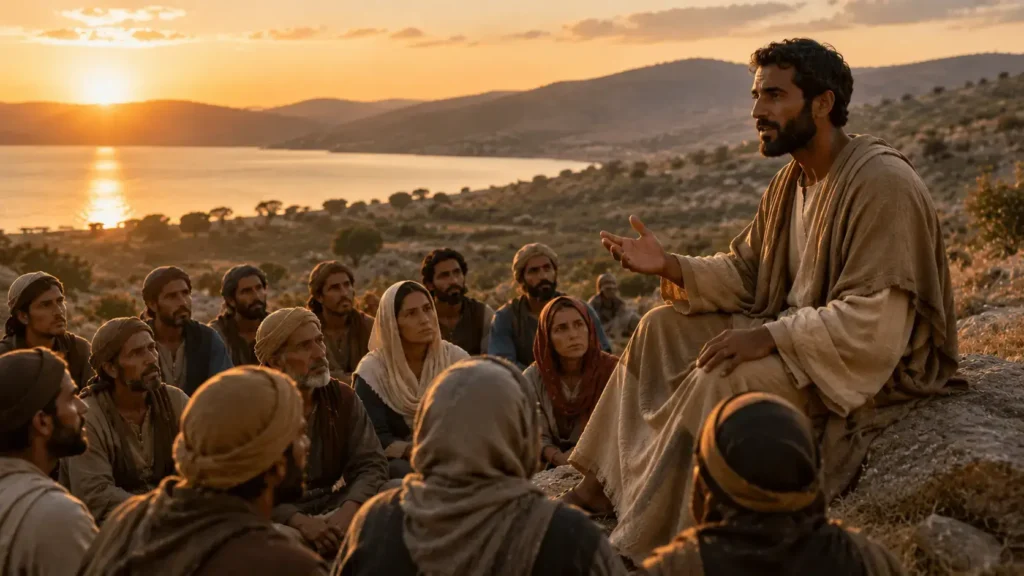
The Kingdom Was the Center of Jesus’ Teaching
Once you begin looking for it, you cannot stop seeing it.
Jesus repeatedly said,
“The Kingdom of God is like…”
or
“The Kingdom of Heaven is like…”
He compared God’s Kingdom to:
- a mustard seed
- yeast hidden in dough
- hidden treasure
- a pearl of great price
- a fishing net
- a wedding banquet
- a vineyard owner
- a landowner settling accounts
- ten virgins waiting for the bridegroom
Rather than giving abstract theological lectures, Jesus explained the Kingdom through stories that revealed how God’s rule operates.
Even when His disciples asked Him how to pray, Jesus instructed them to begin with:
“Your kingdom come. Your will be done, on earth as it is in heaven.” — Matthew 6:10
The Kingdom wasn’t a side topic.
It was the framework through which Jesus explained almost everything.
According to biblical scholars, references to the Kingdom of God or Kingdom of Heaven appear well over 100 times throughout the Gospels, making it one of Jesus’ dominant teaching themes.
For a helpful overview, the BibleProject’s study on the Kingdom of God provides an excellent visual explanation.
Why So Many Christians Miss the Kingdom
Let me ask you something uncomfortable.
Why do so many Christians struggle with prayer?
Why does prayer sometimes feel like negotiating with God?
Why do many believers feel powerless even though Scripture repeatedly speaks about authority in Christ?
I don’t believe it’s because God is distant.
I think many of us misunderstand one word that Jesus used constantly:
Kingdom.
We Read Kingdom Through a Democratic Mindset
Here’s my theory.
Most of us have never lived under a king.
We’ve grown up in democracies.
We vote leaders into office.
We vote them out.
Authority ultimately flows upward—from the people.
Without realizing it, we often read that same mindset into Scripture.
So we unconsciously reinterpret the Bible:
- Kings become presidents.
- Kingdoms become organizations.
- Citizens become members.
But biblical kingdoms didn’t work that way.
In a kingdom:
- The king is not elected.
- The king’s word is law.
- Everything ultimately belongs to the king.
- The king’s authority is absolute.
Now read Jesus’ words again:
“Seek first the kingdom of God and His righteousness, and all these things shall be added to you.” — Matthew 6:33
This isn’t simply a motivational verse.
It describes how life functions under God’s reign.
The King provides for those who trust His rule.

We Are Not Merely Subjects. We Are Sons and Daughters
This is where the Gospel becomes deeply personal.
The New Testament uses extraordinary language to describe believers.
Peter writes:
“You are a chosen generation, a royal priesthood…” — 1 Peter 2:9
Paul writes:
“If children, then heirs—heirs of God and fellow heirs with Christ.” — Romans 8:17
John writes that Christ
“…has made us kings and priests unto God…” — Revelation 1:6 (KJV)
These verses describe our identity because of our relationship with Christ.
A subject approaches a throne hoping the king might listen.
A son or daughter approaches differently—not because of pride, but because their place in the family has already been established.
That is why Hebrews encourages believers:
“Let us therefore come boldly unto the throne of grace…” — Hebrews 4:16
This helps us understand Jesus’ first command:
Repent.
Not merely “feel guilty.”
Change the way you think.
Stop reasoning like someone standing outside the palace gates.
Begin living like someone who belongs in the Father’s house.
The Centurion Understood Authority
One of the clearest examples of Kingdom thinking appears in Matthew 8.
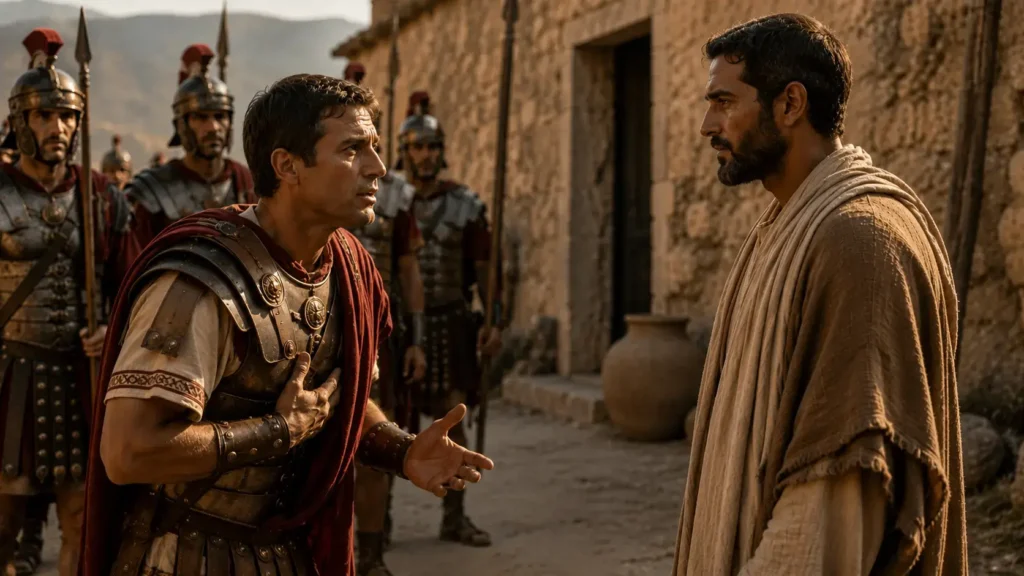
A Roman centurion approached Jesus because his servant was seriously ill.
Jesus offered to visit his home.
Instead, the centurion replied:
“Only speak the word, and my servant will be healed.”
Then he explained why.
He understood authority.
He lived within a chain of command every day.
When he gave an order, it was carried out because authority—not proximity—produced results.
Jesus responded by saying:
“I have not found such great faith, no, not in Israel.” — Matthew 8:10
The centurion recognized that Jesus possessed divine authority.
His faith rested in the authority of the King.
This Isn’t About Getting Everything You Want
It’s important to make something clear.
Understanding God’s Kingdom is not a formula for getting everything you ask for.
Scripture is honest about unanswered questions.
The Apostle Paul prayed three times for his “thorn in the flesh” to be removed, yet God chose not to remove it (2 Corinthians 12:7–10).
Job endured immense suffering without ever receiving a full explanation.
The Kingdom is not about manipulating God.
It is about trusting the King.
The greatest change often happens not in our circumstances but in our posture before God.
Four Practical Ways to Live with a Kingdom Mindset
1. Evaluate Your Prayer Language
Listen to how you pray.
Are you constantly negotiating?
Or are you approaching your Heavenly Father with humble confidence?
2. Read the Parables Together
Instead of viewing each parable as an isolated story, notice how they collectively reveal how God’s Kingdom operates.
3. Ask One Kingdom Question
Whenever you face stress or uncertainty, ask:
“How would someone who already belongs to God’s Kingdom respond?”
That question alone can reshape your perspective.
4. Pray “Your Kingdom Come” Daily
Don’t let those words become routine.
Pray them intentionally.
Invite God’s rule into your decisions, relationships, finances, work, and everyday life.

Final Thoughts
Jesus spent His earthly ministry proclaiming that God’s Kingdom had arrived in and through Him. Salvation, forgiveness, healing, discipleship, and eternal life are all inseparable from that Kingdom message—they reveal what life under God’s reign looks like.
If you have placed your faith in Christ, you are not approaching God as a stranger trying to earn His attention.
You have been invited into His family through Jesus Christ.
That truth changes how you pray.
It changes how you live.
And it changes how you read the Bible.
Perhaps that’s why Jesus continually pointed people back to one central message:
“Seek first the kingdom of God…” — Matthew 6:33
When the Kingdom becomes your primary lens, the rest of Scripture begins to connect in remarkable ways.
I’d love to hear from you: Has understanding the Kingdom of God changed the way you read the Bible or pray? Share your thoughts in the comments below.
Frequently Asked Questions (FAQ)
1. What was the main message Jesus came to preach?
Jesus came to preach the Kingdom of God — the reign and rule of God in the hearts of people. His message was about repentance, transformation, and restoration to God’s original intent for mankind — living under His divine authority, righteousness, peace, and joy in the Holy Spirit.
2. What does “the Kingdom of God” mean?
The Kingdom of God is not a physical place but God’s spiritual reign wherever His will is done. It’s about bringing heaven’s order, values, and power into the earth — starting within our hearts and extending into how we live, work, and treat others.
3. How is the message of the Kingdom different from religion?
Religion focuses on rituals and outward appearances, but the Kingdom focuses on inner transformation and relationship with God through Jesus Christ. Jesus didn’t come to start a religion; He came to restore what was lost — our dominion, purpose, and fellowship with God.
4. Why did Jesus emphasize repentance?
Repentance means a change of heart and mind — turning away from self-centered living to align with God’s ways. Jesus taught that repentance is the doorway to entering the Kingdom of God (Matthew 4:17).
5. What is the significance of living in the Kingdom today?
Living in the Kingdom means walking in God’s purpose, authority, and abundance. It affects every area of our lives — our families, health, businesses, and communities — as we partner with God to manifest His will on earth as it is in heaven.